
How a Chain of Small Events Led to the Deadly LaGuardia Air Canada Collision
Reconstruction of the collision
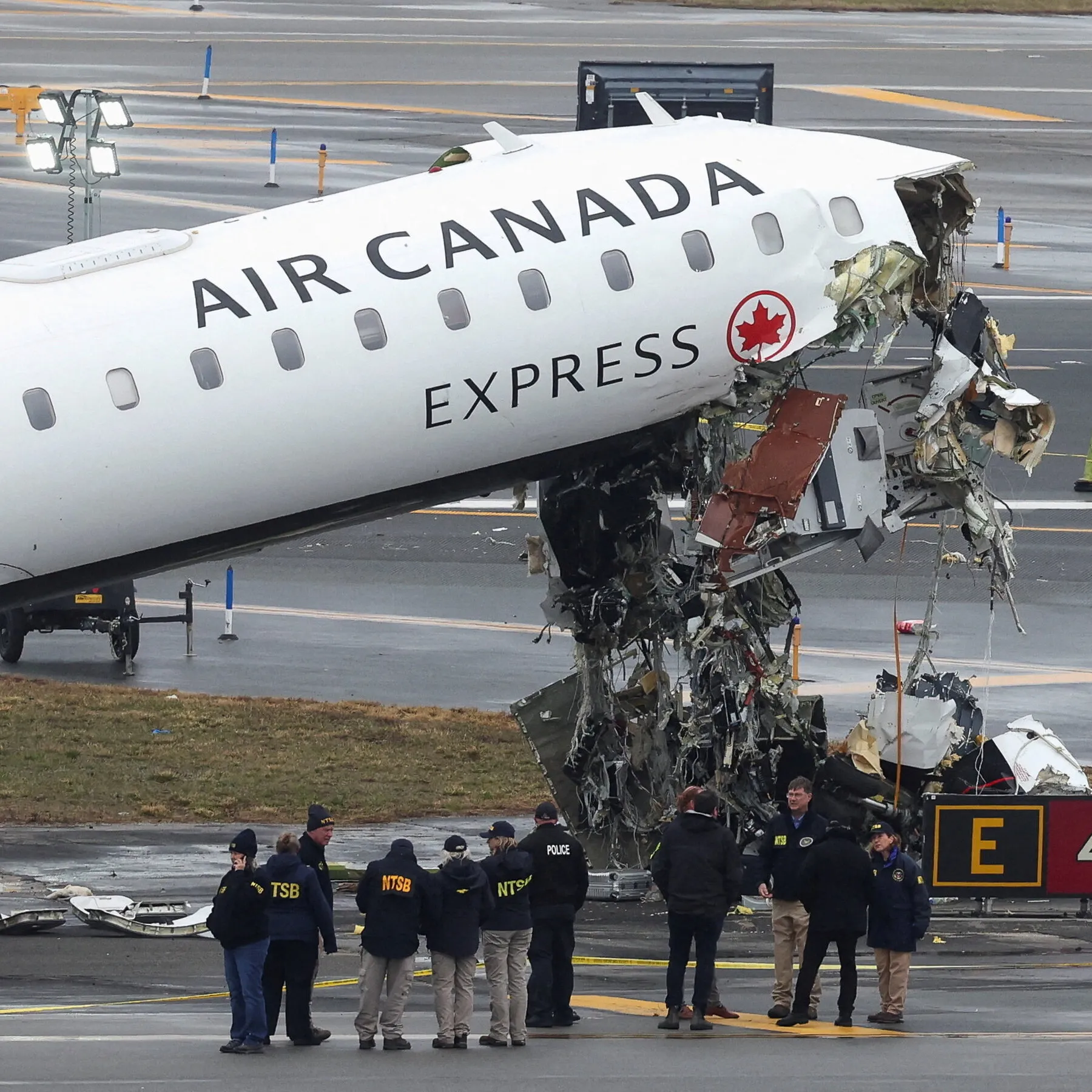
A cascade of seemingly minor events led to the worst runway disaster at LaGuardia Airport in decades, culminating in a frantic air traffic control warning to “Stop, stop, stop.” The collision happened late Sunday night in rainy and foggy conditions and became the first deadly crash at the airport in more than three decades.
The crash involved an Air Canada jet arriving from Montreal with 72 passengers aboard and a specialized airport fire truck responding to another aircraft that had been bound for Chicago but was grounded after reports of a strange odor. The truck was built for airport emergencies, but it lacked a tracking device that is standard at many airports.
Those caught up in the disaster included two young Canadian pilots early in their careers, two veteran firefighters from Queens and Long Island in a specially trained Port Authority Police Department unit, two air traffic controllers early in their overnight shift, and two flight attendants on their last run of the day.
Final seconds on the runway
A step-by-step reconstruction of the final nine seconds shows the Air Canada jet landing on Runway 4 as a convoy of emergency vehicles approached the intersection of Runway 4 and Taxiway D. Air traffic control issued repeated warnings to the lead vehicle, identified as Truck 1.
Seven seconds before impact, the jet touched down. About four seconds before the crash, it was traveling at approximately 130 miles per hour as other emergency vehicles appeared to stop before the runway. Truck 1, however, turned onto Runway 4.
Controllers warned, “Stop, stop, stop, stop,” then “Truck 1, stop,” and again, “Stop, Truck 1 ... stop!” Roughly three seconds after Truck 1 entered the runway, the Air Canada jet collided with it.
Aftermath
In the collision, the two pilots were killed and 41 other people were taken to hospitals with injuries. One flight attendant, still strapped into her seat, was thrown more than 300 feet.
Even with the severe damage, no passengers were killed. By the end of the week, only five people remained hospitalized, an outcome described in the reconstruction as remarkable given the speed of the impact and the scale of the wreckage.
The article’s reconstruction was based on interviews with dozens of people, including passengers, and an analysis of data tracing the moments leading up to the crash.