
Limitations of carbon markets for biodiversity conservation - Nature
Carbon markets face limits as a tool for biodiversity conservation
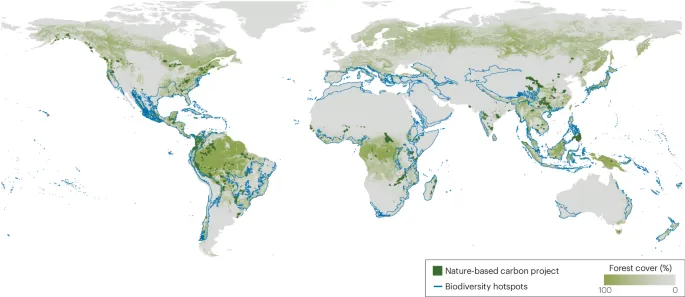
Carbon markets are often presented as one of the most economically viable ways to support biodiversity conservation because they channel investment into nature-based carbon projects. These projects are designed to store and accumulate carbon in natural ecosystems, potentially helping to expand conservation action across much of the world.
But the article argues that carbon markets have fundamental misalignments and shortcomings that limit both their scalability and their effectiveness for biodiversity conservation. The authors say that key rules used to issue carbon credits — including additionality, leakage and permanence — are essential for carbon accounting, yet do not align well with the broader ecological requirements needed to conserve biodiversity.
They also warn that turning nature into tradable carbon credits can create perverse incentives, along with negative social and ecological impacts, that reduce the value of carbon markets as a means of meaningful environmental stewardship.
Why the fit is imperfect
According to the article, the main challenge is that carbon market standards are built to measure and verify carbon outcomes, not necessarily the full set of conditions required to protect species, habitats and ecological integrity over the long term.
Even where nature-based carbon projects generate conservation benefits, the authors argue that those gains should not be overstated. Emerging approaches may address some of the concerns, but they do so only to a limited extent, the article says.
The authors therefore call for a more cautious view of claims that carbon markets can serve as a stand-alone solution for biodiversity protection.
Beyond market instruments
The article concludes that durable biodiversity outcomes will require carbon markets to be embedded within wider frameworks rather than relied on alone. It points to the need for regulatory measures, community-based approaches and blended-finance models that protect ecological integrity, promote equity and provide long-term protection beyond what market instruments can deliver.
In that framing, carbon markets may still play a role in conservation finance, but only as part of a broader system designed around biodiversity outcomes rather than carbon credit generation alone.