
Maine Salmon Recovery Effort Shows Promise but Faces Resistance
Salmon restoration effort
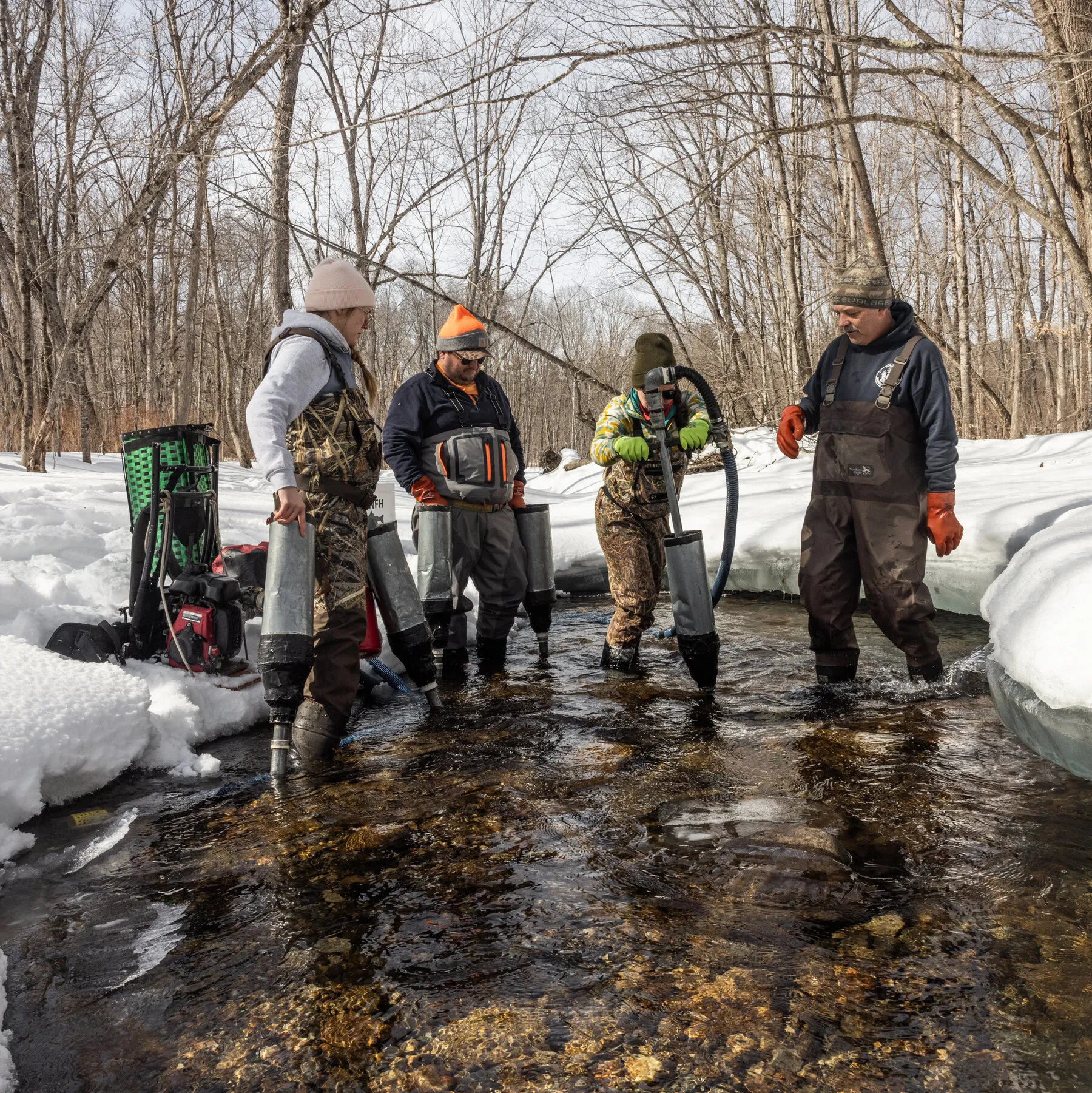
On a bright March morning in western Maine, Paul Christman of the Maine Department of Marine Resources led a crew through deep snow along Avon Valley Brook, a tributary of the Sandy River. The team carried improvised equipment, a water pump and a cooler containing thousands of fertilized Atlantic salmon eggs.
At a stretch of open water, Christman chose a spot where the current pushed water into the gravel bed. There, the crew prepared to place the eggs in conditions intended to support their development.
For two decades, Christman has worked to restore salmon to the Sandy River watershed, where the fish were wiped out after dams built in the 1800s blocked their passage.
Hope and obstacles
The long-term restoration project aims to remove or modify dams so endangered wild Atlantic salmon can once again swim freely upstream to the Sandy River. The effort has produced thousands of juvenile salmon that migrate to the North Atlantic.
But the results remain fragile. Only a small number of adult salmon return to Maine to spawn, underscoring how difficult full recovery has been.
The project also faces opposition from business interests and lawmakers, complicating a restoration strategy that supporters see as essential to rebuilding salmon runs in the watershed.