
New England Fishermen Help Map a Changing Ocean
Fishermen collect ocean data with their catch
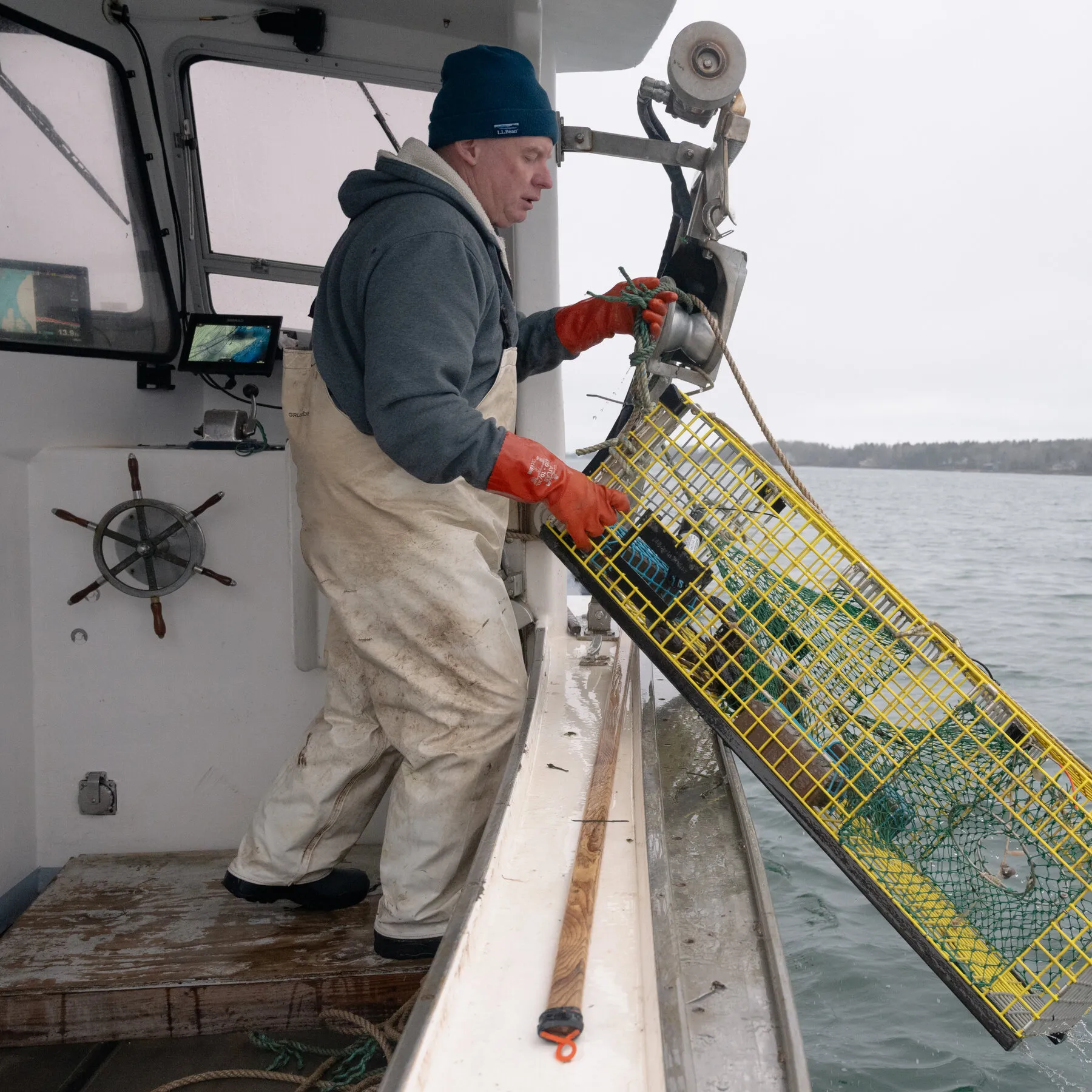
When Bob Hersey Jr., a Maine lobsterman who also dives for sea urchins, pulls up his traps, he is collecting more than seafood. Attached to his gear is a small sensor that records ocean conditions and helps inform regional weather and climate models.
Hersey is one of nearly 150 fishermen from Maine to North Carolina taking part in a nonprofit-run program supported by the National Oceanic and Atmospheric Administration. The soda-can-size sensors are attached to traps or trawl nets and dragged along the seafloor, allowing fishermen and scientists to gather a three-dimensional picture of the ocean instead of relying only on surface measurements from satellites or boat thermometers.
George Maynard, a marine resource management specialist at the National Marine Fisheries Service, said the fishing industry can gather data from places others cannot easily reach. He said the system offers a relatively inexpensive way to collect large amounts of oceanographic information and improve weather and climate models.
Filling gaps in ocean measurements
The sensors currently record water temperature and oxygen levels, and they are expected to begin measuring salinity as well. Salinity is an important sign of large-scale changes in ocean currents that can influence weather patterns.
The program is also helping address gaps in scientific measurements. According to the article, fishing boats are filling in places where fewer temperature observations have been collected by researchers.
Beyond its value to scientists, the data is also proving useful to fishermen like Hersey. Better temperature information can help them decide where to fish as ocean conditions continue to shift.
Correction
The article included a correction stating that the organization maintaining the monitoring devices and compiling the data is the Gulf of Maine Lobster Foundation, not the Gulf of Maine Lobster Research Foundation.