
Record-Low Snowpack and Heat Deepen Western Water Risks
Snow drought grips the West
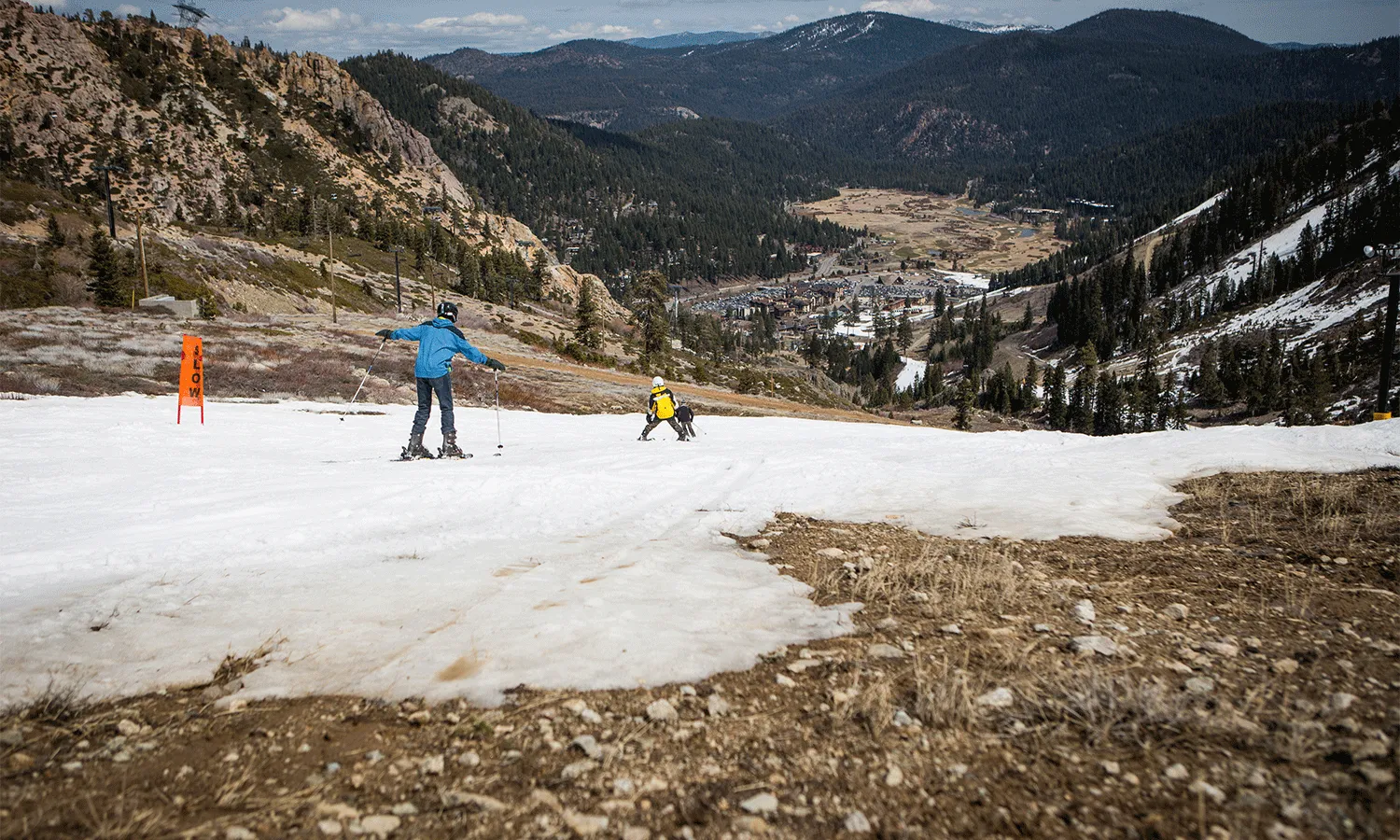
Across the western United States, spring 2026 is beginning with near-record to record-low snowpack and unusually high temperatures, raising concerns about drought, water shortages and wildfire risk in the months ahead. The combination of an unusually warm winter and an extreme March heatwave has reduced snowpack that many Western states depend on for summer water supplies.
Climate change is shifting the winter water cycle, with more precipitation falling as rain instead of snow and warmer temperatures causing earlier runoff from the snow that does accumulate. Researchers have found that the western United States has become a global snow drought hotspot, with snow droughts becoming more prevalent, more intense and longer-lasting over the last two decades compared with 1980 to 2000.
One key measure of snowpack, snow water equivalent, fell below the 20th percentile across the West by early January, the lowest level recorded in 25 years of MODIS satellite observations. By late March 2026, conditions had improved little. In Colorado, snow water equivalent across 115 stations was measured at 38% of average, the lowest level in more than four decades.
California faces shrinking snow reserves
In California, the Sierra Nevada snowpack typically supplies nearly one-third of the state’s annual water needs and serves as a critical "frozen reservoir" through the dry summer months. After an unusually warm winter and a March heatwave, water managers were expected to find very little snow remaining at the state’s April 1 survey, which usually marks the seasonal peak.
California’s snowpack had started the year on a stronger footing, reaching 89% of average statewide in early January after a series of atmospheric rivers. But a dry January, historically the state’s wettest month, pushed that figure down to 59% of average by late January. In the Northern Sierra, where several major reservoirs are located, snowpack measured just 46% of normal in late February.
Before the March heatwave, warm and dry weather was already melting California’s snowpack at an average rate of 1% per day. The heatwave accelerated that loss, with estimates showing that nearly 20% of peak snowpack melted between late February and early March. At the same time, major reservoirs filled by winter precipitation were at 122% of average statewide, leaving less room to absorb early runoff from mountain snowmelt and any additional late-season storms.
Heat, water strain and wildfire risk
Scientists said the March heatwave across western North America was virtually impossible without human-caused climate change. The event followed one of the warmest winters on record across the region, with every major river basin in the West experiencing its first- or second-warmest December-through-February period on record. The warmth reduced snowfall even at some high elevations and contributed to early ski season closures in parts of the region.
The effects extend well beyond recreation. Reduced snowpack and earlier melt leave soils and vegetation drier for longer, increasing wildfire risk. Research warns that declining snowpack and earlier snowmelt may prime forested watersheds to dry out, burn and experience more severe fires, especially in places where snow historically buffered fire danger. Earlier snowmelt can also lengthen the fire season by extending the period when vegetation becomes flammable.
The snow drought also threatens broader water systems. The Colorado River Basin, where snow cover reached its lowest level on record, supplies water to 40 million people. Concerns are growing not only about water availability but also about hydropower generation. Government projections suggest Glen Canyon Dam, above Lake Powell, could become inoperable for power generation by December 2026 if water levels fall below the minimum threshold.
Adapting to a hotter, drier future
Forecasters expect drought to expand across the western United States this spring, even after California briefly became 100% drought-free following a wet start to winter. Officials and water managers are increasingly being forced to adapt infrastructure and forecasting methods to conditions that no longer resemble the past.
California has already changed the way it evaluates the relationship between snowpack, spring runoff and reservoir storage after earlier dry years exposed major forecasting errors. During the 2021-2022 dry period, runoff was overestimated by 68% for Sacramento River watersheds and by more than 45% for southern watersheds because warming-driven changes were not fully accounted for.
Improved forecasting may help the state respond better to this year’s snow drought, but it does not remove the physical challenge of balancing summer water supply, flood control and a shrinking snowpack. This year’s snow survey is expected to help shape how California and other Western states rethink water management as climate change continues to warm the region.