
UN Rapporteur Says Mexico’s Circular Economy Law Does Not Ban Single-Use Plastics
UN statement on Mexico's plastics law
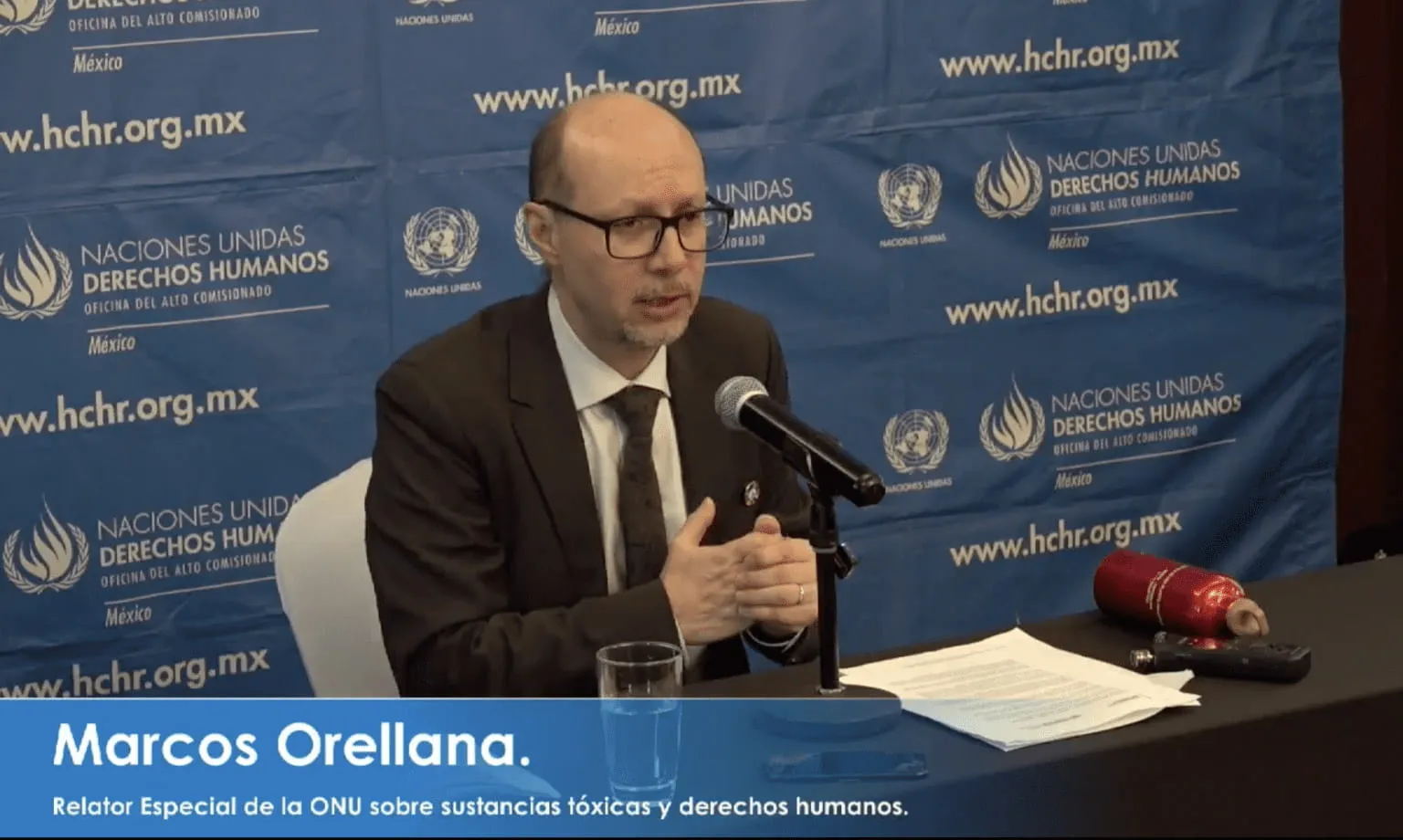
Mexico’s General Circular Economy Law does not ban single-use plastics and should not be treated as sufficient compliance with a court-backed obligation to address their harms, according to United Nations Special Rapporteur on toxic substances and human rights Marcos A. Orellana.
In a public statement issued during his visit to Mexico, Orellana expressed concern over efforts to treat the enactment of the General Circular Economy Law, or LGEC, as fulfilling an injunction won by civil society organizations seeking a ban on single-use plastics in the country.
The statement follows a court ruling brought by Greenpeace Mexico, El Poder del Consumidor, Acción Ecológica, Fronteras Comunes, No Es Basura, and Asociación Ecológica Santo Tomás. The ruling recognized the state’s obligation to adopt effective measures against the impacts of single-use plastics, including the possibility of banning them in order to protect the rights to health and to a healthy environment.
Concerns over compliance and enforcement
Civil society groups have warned that the ruling could be weakened if a judge considers the LGEC sufficient on its own. They argue the law does not establish clear restrictions on single-use plastics or effective measures to reduce their production and consumption.
Orellana said the LGEC cannot be considered enough to comply with the constitutional protection because it does not ban single-use plastics and reflects a different approach. He also said extended producer responsibility under the law remains inadequate because it is not backed by sufficient financial contributions from industry for waste management.
At a press conference, Orellana said the circular economy has potential only if it is chemically safe. Civil society groups said that standard is not met in Mexico because the federal government’s promoted model includes pyrolysis, which they described as a toxic process rather than a safe circular solution.
Health and environmental risks
The remarks come amid growing scientific evidence on the effects of plastics and microplastics across their life cycle on ecosystems, human health, and human rights. Orellana also pointed to rising waste imports into Mexico, saying they may be used in co-processing to generate cheap industrial fuel while harming people’s health.
The organizations called on the federal government and lawmakers to respond by creating and implementing stronger public policies and regulations, including reforms to the General Law for the Prevention and Comprehensive Management of Waste aimed at phasing out single-use plastics and preventing exposure to toxic chemicals. They also urged authorities to reject what they called false solutions such as incineration, pyrolysis, co-processing, and waste-to-energy.
The groups said plastics, though designed for short-term use, persist in the environment and break down into microplastics that contaminate water, soil, and food. They also cited research documenting hazardous chemicals in food-contact plastics, including phthalates, bisphenols, heavy metals such as lead, and PFAS, often called “forever chemicals.” According to the article, more than 4,200 potentially hazardous chemicals are present or used in plastic production, and at least 1,396 chemicals related to food-contact materials have been identified in the human body.
Waste system pressures
The article also described broader waste-management problems in Mexico, saying the country faces an environmental and health emergency linked to saturated and irregular landfills and disposal sites. It cited 2,338 recognized landfills or final disposal sites nationwide, while noting limited monitoring and environmental safeguards.
According to the figures cited, only 7.2% of these sites have scales, 14.4% have access control, 13.7% have geomembranes to isolate waste from soil, 18% capture leachate, and 14.4% treat those liquids in some way.
The Special Rapporteur’s statement, the signatory organizations said, underscores the need for Mexico’s policies to align with the highest international standards on human rights and toxic substances, while advancing production and consumption models that prioritize public health, reduce plastic pollution, and prevent exposure to hazardous substances.