
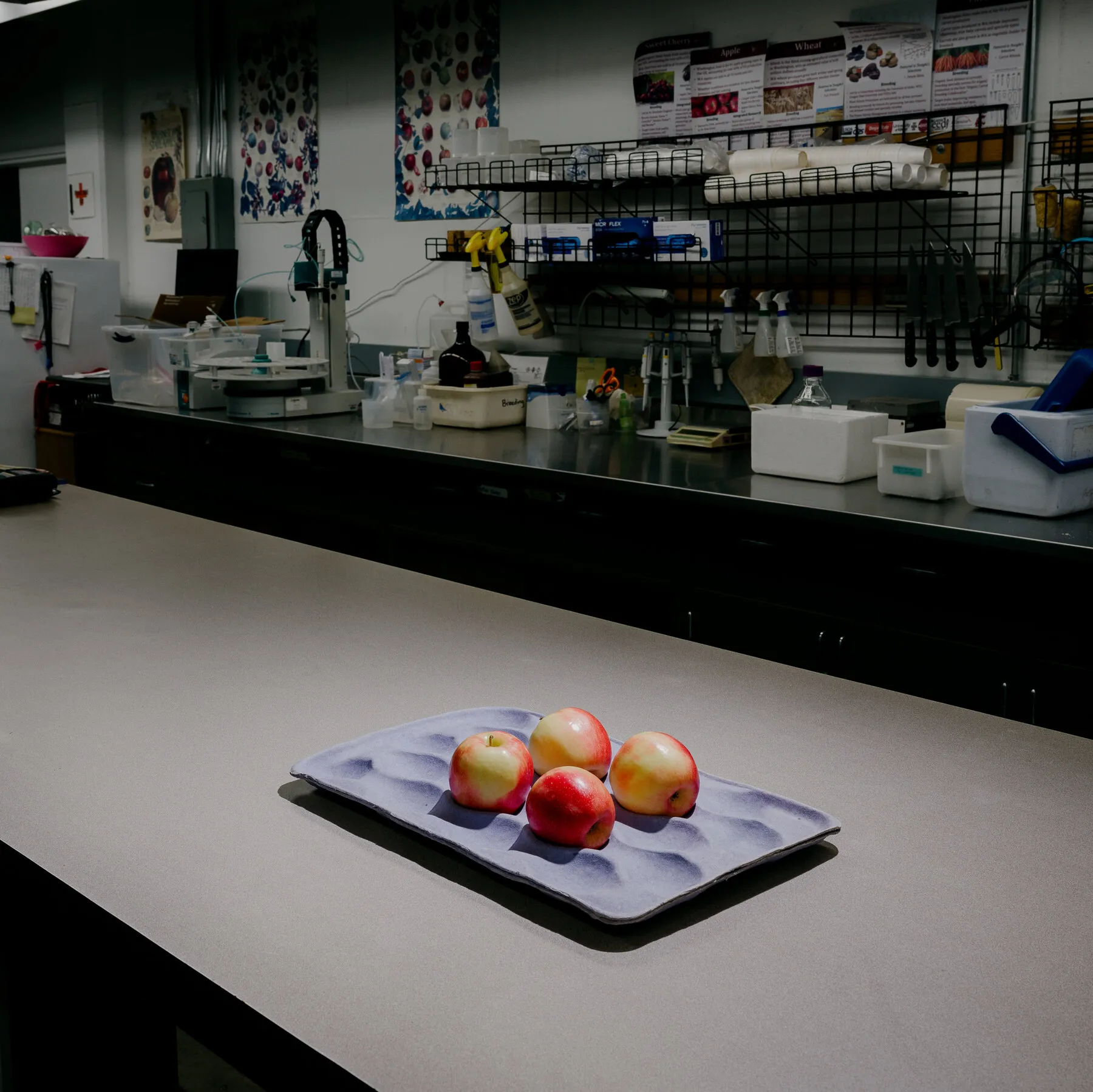
Washington State Unveils Sunflare, a New Apple Bred for a Changing Climate
A New Apple for a Changing Industry
Washington State University is introducing a new apple called Sunflare, a variety researchers say tastes as good as Cosmic Crisp while standing up better to unpredictable weather and other pressures facing growers.
The debut comes as the U.S. apple industry faces a changing set of challenges. Growers are dealing with rising costs, trade disruptions, crowded supermarket shelves and the effects of climate change, including hotter summers, wilder winters and wildfire threats. Researchers say new apple varieties now need to do more than appeal to consumers; they also need to be tougher in the field and in storage.
Kate Evans, a horticulturist at Washington State who helped create both Cosmic Crisp and Sunflare, said no single apple can meet every need. But, she said, each one that reaches market should do more.
Breeding for Flavor and Durability
Sunflare was created by crossing a Honeycrisp, valued for its crunch and juiciness but harder to grow and store, with a Cripps Pink, known for tartness and greater hardiness. The resulting apple has a pinkish-red blush over yellow and, according to the university, offers the sweet-tart balance American consumers prefer.
Researchers say it also has a quicker growing season and a tougher skin that helps with heat and storage. Those traits are increasingly important as breeders try to prepare fruit for more volatile growing conditions.
Developing a new apple is a long process. From cross-pollination to patent, it can take 18 to 25 years. Evans begins by selecting traits she wants, crossbreeding two varieties by hand, planting seeds and growing thousands of trees. Years later, the fruit is tested for acidity, storage life and disease resistance. Most candidates are ultimately discarded.
Lessons From Cosmic Crisp
Sunflare is the third named apple variety released by Washington State since its tree fruit program began in 1994, and the first since Cosmic Crisp was introduced in 2019. Cosmic Crisp became a major commercial success, helped by a $10 million marketing campaign and by claims that it matched Honeycrisp in taste while staying fresh longer and producing higher yields.
The variety also became financially important to the university. Washington State earns licensing fees when growers plant Cosmic Crisp trees and when boxes reach retailers. Last year, growers had planted 22.5 million Cosmic Crisp trees, and the apple generated $8 million for the school.
Sunflare, however, is expected to have a slower rollout. Washington growers will begin planting it this spring and hold exclusive rights for a decade, but consumers are not expected to see it in stores until 2029.
A Crowded Market
The timing reflects a more difficult market for new apples. China produces 60 percent of the world’s supply, trade wars and tariffs have shifted markets for American fruit, and many new varieties are competing for limited shelf space.
This winter, Sunflare has been promoted at colleges and farmers’ markets to build interest among Washington growers. Still, some major producers are holding back. Stemilt Growers, one of Washington’s largest apple producers, does not plan to plant Sunflare this year.
Brianna Shales, Stemilt’s marketing director, said the market is struggling to align supply with demand, with too many new apples and not enough shelf space.
For Washington State’s breeders, that means the challenge is no longer just creating a better-tasting apple. It is creating one suited to a more volatile climate and a more competitive global market.